
India has completely protected the interests of its agriculture and dairy sector in the India-US trade agreement.

The Gujarat government has imposed a state-wide ban on the production, transportation, and sale of unstandardised analogue paneer, cheese, and butter. Citing public health concerns and the need to protect consumers and the dairy sector, the decision follows detections of substandard artificial dairy products during inspections. Legal action will be taken against violators.
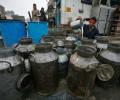
India has fully protected its sensitive sectors like dairy, rice, wheat, pulses, tea, genetically modified (GM) goods, and coffee by not granting any import duty concessions to the European Union (EU) under the bilateral free trade agreement, according to the Commerce Ministry.

After Maharashtra's crackdown on analogue paneer, here's what dietitians say about its nutritional value, health concerns and how to choose fresh paneer.

The US-Canada trade war has escalated sharply, with US President Donald Trump on Monday announcing that tariffs on Canadian cars, trucks, automotive parts and steel imports will be raised to 50 percent from January 2027, following the collapse of trade negotiations between Washington and Ottawa last week.

In her address to the nation on the eve of the country's 80th Independence Day, the president stressed that just as government and society remain united to ensure national security, everyone must contribute through joint and concerted efforts to safeguard the present and future of students.
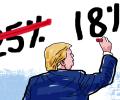
Several farmer organisations in India are protesting the proposed India-US trade deal, expressing concerns about its impact on the agriculture sector and demanding the resignation of the Commerce Minister.

New Delhi will substantially reduce tariffs on industrial and agricultural goods while continuing to protect sensitive sectors. Tariffs on some agricultural products that are not traditionally considered sensitive will be brought down to zero, while in the case of relatively sensitive items, duties will be reduced in a graded manner and quotas will be imposed.

India and New Zealand have signed a comprehensive Free Trade Agreement (FTA) aimed at significantly boosting bilateral commerce and investments, providing duty-free access for 100 per cent of India's exports to New Zealand and securing duty-free inputs for India's manufacturing sector.

India has protected the interest of domestic farmers and MSMEs by not extending any duty concessions on products across several sectors, including agricultural items such as dairy, as well as chocolates, gold, silver, jewellery, footwear, and sports goods, under the trade pact with Oman.

Import duty cuts on labour-intensive sectors such as textiles and footwear, as well as cars, and wines, are likely to be part of the free trade agreement between India and the 27-nation bloc European Union (EU), the conclusion of which is set to be announced on January 27 here, sources said.
India and New Zealand are poised to sign a free trade agreement (FTA) on April 27 in New Delhi, aiming to provide tariff-free access for Indian goods to New Zealand's market and attract USD 20 billion in investment over the next 15 years.

India and the European Union are set to announce on January 27 the conclusion of negotiations and finalisation of a free trade agreement, which is aimed at boosting economic ties between the two regions amid disruptions in global trade due to US tariffs, an official said.

Piyush Goyal on Friday rejected reports suggesting that India is planning to hold off trade deal with the United States for several months.

India will take all necessary steps to safeguard and promote national interest, Commerce and Industry Minister Piyush Goyal said on Thursday, a day after US President Donald Trump announced 25 per cent tariffs plus penalty on domestic exports to America from August 1.

Prime Minister Narendra Modi on Tuesday announced the signing of the India-EU Free Trade Agreement (FTA), saying it accounts for 25 per cent of global GDP and one-third of global trade.
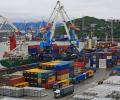
US and India will promptly implement this framework and work towards finalising the interim agreement with a view to concluding a mutually beneficial bilateral trade agreement.

India announces Padma Shri awards for 45 individuals, recognizing 'unsung heroes' like a former bus conductor who created the world's largest free library and a pediatrician who established Asia's first human milk bank.
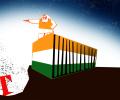
Both countries commit to provide each other preferential market access in sectors of respective interest on a sustained basis

Amid uncertainty over trade talks with the US, Prime Minister Modi asserts India's commitment to protecting the interests of farmers and fishermen, vowing no compromise on their behalf.
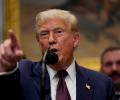
India would neither succumb to the Americans on issues of national security, such as its defence ties with Russia, nor cede ground on its domestic interests in the agriculture and dairy sectors.
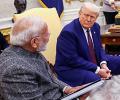
The Indian government is studying the implications of US President Trump's announcement to impose tariffs on Indian goods and remains hopeful of concluding a bilateral trade agreement.

'We have tags of state animals and birds. However, the invisible world of microbes is doing a lot of things for us in nature, not just for human beings but for the entire life.'

Commerce Minister Piyush Goyal assures Parliament that India will take necessary steps to protect its national interests following the US announcement of tariffs on Indian goods. The government is assessing the implications and engaging with stakeholders.
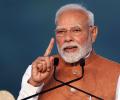
Prime Minister Narendra Modi on Friday said India will never compromise the interests of its farmers, fishermen and dairy farmers, asserting that he would be ready to pay any price.
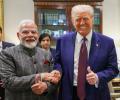
The agreement addresses non-tariff barriers and promotes increased trade in technology products and cooperation between the two countries.

India and the European Union (EU) on Tuesday announced the conclusion and finalisation of negotiations for the proposed free trade agreement (FTA).
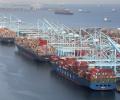
India and the US have decided to hold sector-specific talks in the coming weeks to finalise the structure of the proposed bilateral trade agreement (BTA), the government said on Saturday. The engagement between the two countries came in the backdrop of the USA's threat to impose reciprocal tariffs on its key trading partners, including India, on April 2.
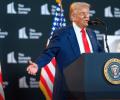
He added that India sells to the US, its biggest "client", "massive" amounts of goods, "but we sell them very little - Until now a totally one sided relationship, and it has been for many decades."
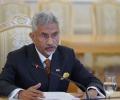
The relations between New Delhi and Washington are on a downturn after Trump doubled tariffs on Indian goods to a whopping 50 per cent, including 25 per cent additional duties for India's purchase of Russian crude oil.
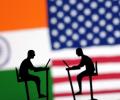
The US is expected to push for sweeping changes in India's policies, ranging from tariff reductions to regulatory overhauls, that could benefit American firms and exporters, under the proposed bilateral trade agreement with India, think tank GTRI said on Sunday.

Brave statements such as we will continue to be the fastest growing large country are of no consolation, because the direction of trade also determines the flow of investment, points out M Govinda Rao.

The United States action of levying 25 per cent additional tariff on Indian goods is 'unfair, unjustified and unreasonable', India said on Wednesday in a firm reaction, signalling increasing tensions between the two strategic partners over New Delhi's energy ties with Moscow.
The deal fell through over unresolved disagreements over contentious issues, mainly on agriculture and automotive sector tariffs.
In trade negotiations, as in chess, sometimes you need to accept a temporary disadvantage to secure a better long-term position, points out Sonal Varma, chief economist (India and Asia ex-Japan) at Nomura.
India and the US are likely to agree on an interim trade agreement before July 8 with New Delhi pushing for full exemption from the 26 per cent reciprocal tariff on domestic goods, an official said. The US on April 2 imposed an additional 26 per cent reciprocal tariff on Indian goods but suspended it for 90 days till July 9.
'But I don't think the government is in a great hurry to sign the BTA.'

'I realised why the farmers and the rural folks are going for Trump. They are so insecure and vulnerable that anybody who is throwing a line of hope to them, they seize it.'

If India caves in to US pressure as Trump hopes it will, he will further try to blackmail it into submission, points out Ramesh Menon.
'Trump is likely being purposefully vague, hoping that this lack of clarity will pressure India, fearing the worst, to agree to scale back its imports of Russian oil.'
